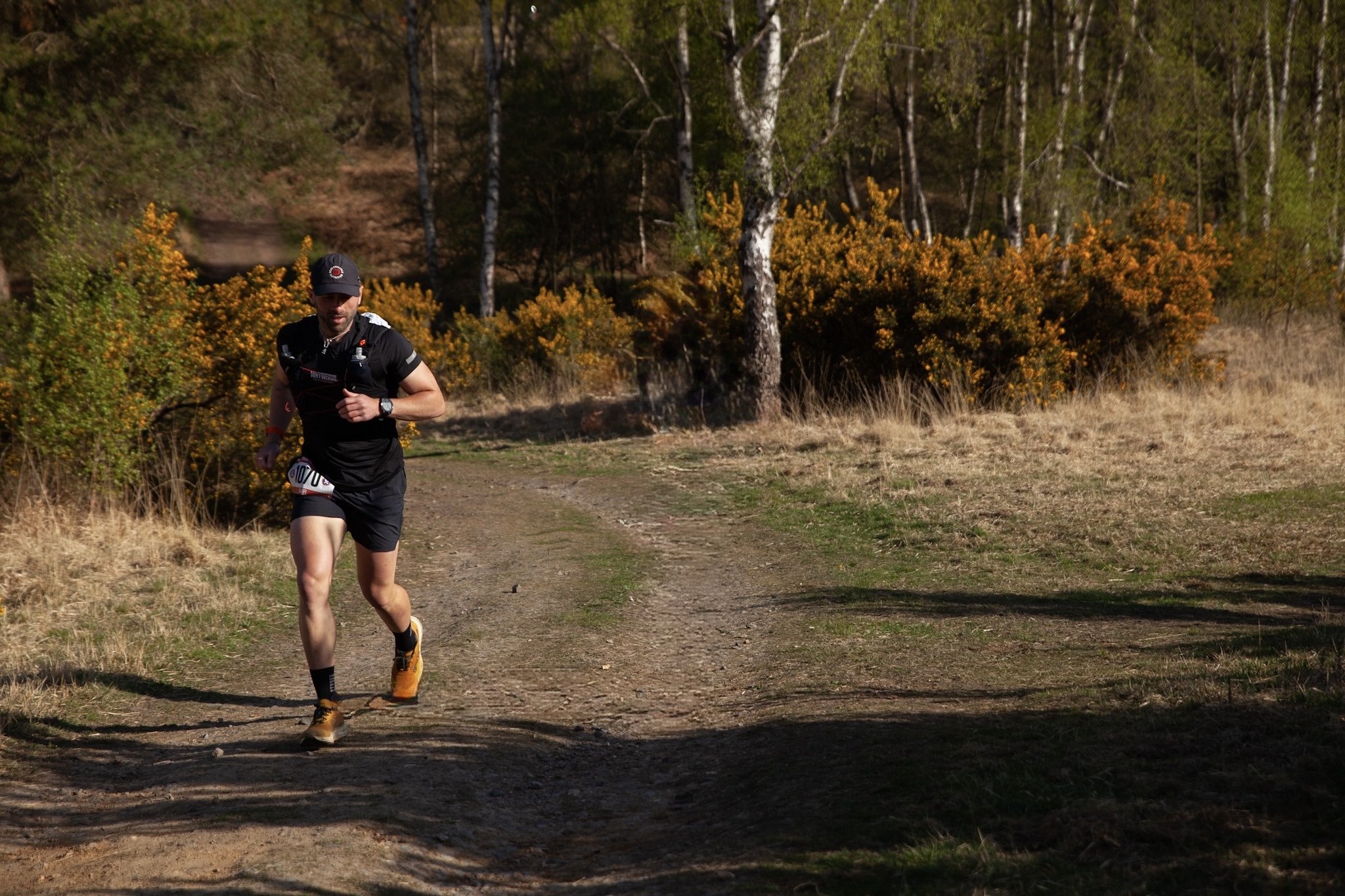
Why the 50km is the perfect first ultra
The 50km sits in a sweet spot. It is long enough to be legitimately challenging and short enough that you can complete it on relatively sensible training. Most runners who have done a marathon can get around a 50km with the right preparation.
I'd recommend everyone start their ultra journey with one. It gives you an understanding of what it's like to carry a pack, to plan your hydration and fueling strategy more seriously, navigate a new unknown and spend a lot of time on your feet.
Where most first-timers go wrong
The biggest mistake is treating a 50km like a long marathon. The mindset, pacing, and preparation are different. Here are the things I see most often.
- Going out too fast in the first third (when you feel fresh)
- Worrying about your splits
- Not understanding the impact that elevation has on your race
- Under-fueling because you're not always moving as fast
- Not integrating proper strength training to prepare your body for the challenge
- Not training specifically enough (terrain, elevation, etc.)
The biggest mistake I've seen my athletes make is not treating the 50km with the respect it deserves. Many of them had run marathons and saw this as just 8km further, but that's too simple.
The 50km is often fast, packed with elevation and has sections where you can push and where you have to be patient. Very rarely will you stay at the same pace throughout the race the way you would in a road marathon.
How much weekly mileage do you actually need?
There is no single correct answer, but there is a sensible range. The key is building your volume gradually and making sure your longest runs reflect the demands of your race.
Whilst everyone is different, across the athletes that I coach 5–8 hours of running a week with some surges in peak weeks seems to be a sweet spot for the 50km distance. Training for ultras isn't just about objective distance, it's about specificity, ability to tolerate the volume and having balance across your training. You could run 60km in a week on flat ground in 5 hours or run 50km on hilly terrain in 8 hours. Viewing your training the way you would road running doesn't quite work.
50km training requires patience, wisdom and an ability to control your effort. It's got some teeth and I've been bitten before.
The long run: how far and how often
Your long run is the backbone of 50km preparation. But how far should you go, and how often should you push that distance?
It's more complex than just incrementally increasing your weekly long run week on week. If you're running 50km you don't necessarily need to have run 45km in training. Ultras are different. What matters way more is how much quality training you've banked during the block. Your race isn't determined by a few sessions. It's built on the consistency of turning up week in, week out, even if your longest run was only 35km.
A note on back-to-back long runs
You will often hear coaches recommend back-to-back long runs: a long run on Saturday followed by another on Sunday to simulate running on tired legs. It's a methodology I don't subscribe to for your first 50km. It has some uses at longer distances and multi-stage events, but for this distance I don't think the juice is worth the squeeze here.
The chances are that the second session doesn't really help us get closer to our goal. Sure, it's a way of getting more volume in, but the quality of the session is impacted by the day before and we end up creating this grey zone of: is it an easy run or is relative effort drifting too high because of fatigue. I'd much prefer the focus be quality sessions executed properly than chasing volume for the sake of it.
Strength work alongside your running
Trail running is a full-body effort. It's more demanding across more muscles than road running and strength matters, especially on technical terrain and in the final kilometres when form breaks down.
Strength training doesn't need to take over your life and you can get some really great work done in 2x1-hour sessions across the week. It needs to be more efficient because energy levels are already being challenged, but it doesn't need to be complicated. The same way your running sessions change throughout your training block, so does your strength. There's less need to push high reps and weights and more importance in being able to control the forces you produce. Everything about the sport is grounded in specificity.
Tapering: what to do in the final three weeks
The taper is where many runners panic and either train too much or do nothing at all. Neither is right. Your fitness is already built. The taper is about arriving fresh.
I say to all my athletes: "Better to be over-rested than over-trained." The taper is not the time to go off script. It's annoying, uncomfortable and will push even the most seasoned runners to question themselves. I prefer a longer taper, typically three weeks. Reduce the volume, keep some intensity and really hone in on the specific things that make your race unique. Your biggest challenge now is not having a breakdown (we've all been there, I promise) and trusting yourself.
Race day
You have done the work. Race day is about executing the plan, not proving yourself.
Pacing
I love coaching using RPE (rate of perceived exertion). The first half should feel as though you're holding yourself back: a 5/10 effort, where you could stay here all day. You're trying to stop yourself from burning all that energy too soon. Focus instead on knowing where the hard sections are and where you can push a little harder. Be patient. The better you know the course and what to expect, the easier it is to trust yourself.
The second half is where you get to change the pace and decide to push or keep it steady. I'll often try to push the effort to 7/10 from 30–40km if I'm feeling good, and if I have anything left I'll push as hard as I can to the finish. I can't stress this enough: DO NOT LOOK AT YOUR SPLITS. Learn to understand how you're feeling.
Fueling
Little and often is the name of the game for both your fuel and hydration. The last thing you want is having to take two gels back to back because you forgot to take one sooner. Practise what you're planning on using and write down your timings so you don't have to think about it on the day. It should feel second nature. I like to eat something every 30–45 minutes. Same goes for hydration: drink to thirst and stay on top of it. If it's hot, plan accordingly. And whenever you see Coke at an aid station, take it. It has saved me more times than I'll admit when I've hit a wall.
The mental side
You signed up for this because you wanted a challenge. It will be hard and you will have to battle. Take stock in the fact that you've overcome so much to get to the start line and that it's just a matter of putting one foot in front of the other. The discomfort you're feeling will be gone 10 minutes after you finish.
Final thoughts
The 50km is an awesome distance that will test you in so many ways. It can feel daunting and overwhelming at times, but once you break it down and know where to focus your attention and effort it's a really fun distance to run. It's how almost all of us got hooked, so there's something to be said for entering at your own risk. Be specific in your training, look for consistency across your training block, and be patient on the day. You can figure out the rest as you go.
Ready to start training?
If you have a 50km on the horizon and want a plan built around your life, let's talk.
Apply to Work Together